Cupping Guide · Knoxville, TN
Cupping Explained: A Knoxville Guide
What It Is, What People Use It For, What the Marks Are, and What to Avoid After — From Licensed Knoxville LMTs
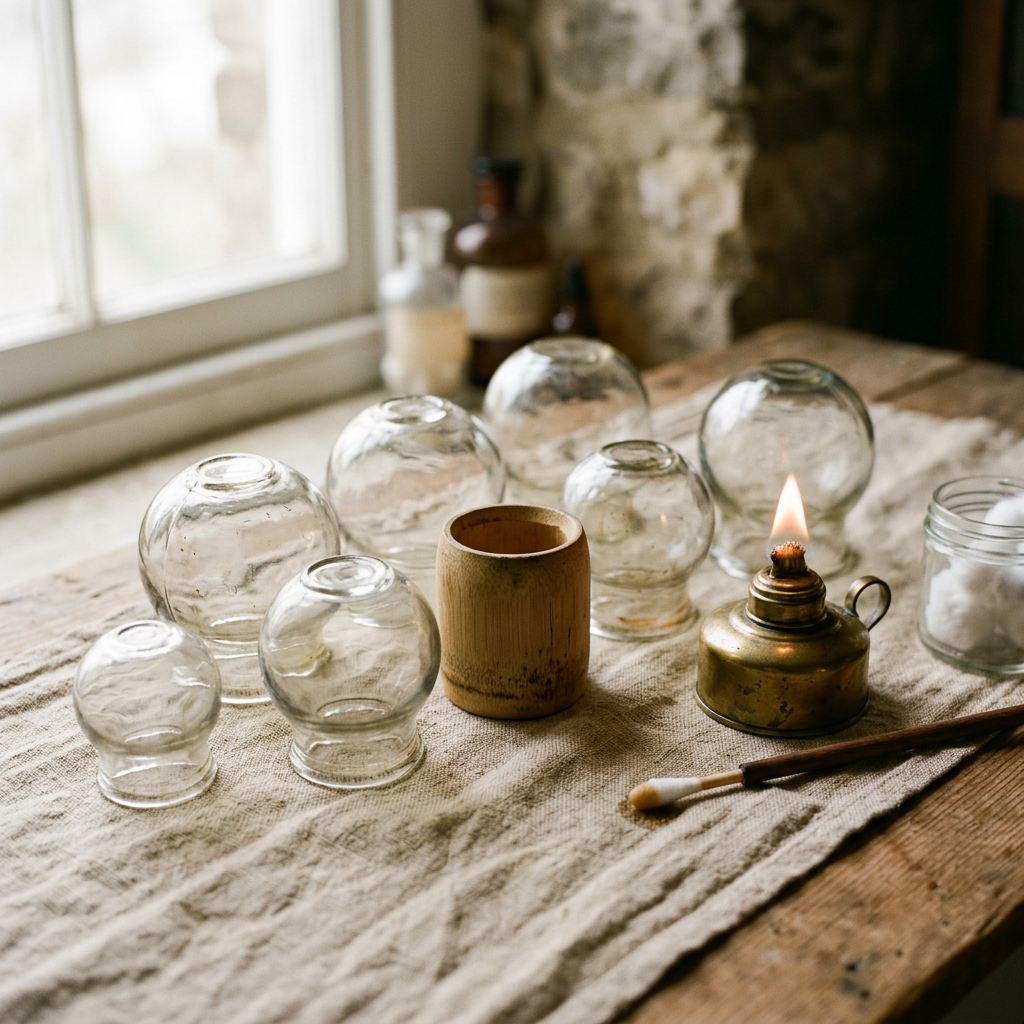
Cupping is a traditional practice in which a therapist places a cup on your skin and creates suction, pulling the skin and the tissue just beneath it gently upward. That pull is the whole technique, and it is the opposite of what a massage does. A massage presses down into muscle. Cupping draws it up.
Licensed Knoxville therapists wrote this for people who are curious about cupping and want a straight answer before they book. It covers what cupping is, what people actually use it for, what the round marks really are, who should think twice, and what to do (and avoid) afterward. A lot of cupping writing oversells; the most useful thing a local can be handed is the plain truth.
Cupping is a low-evidence comfort practice, not a medical treatment. The federal agency that studies practices like this lists no conditions cupping treats, and what that means gets spelled out below. If you already know cupping is for you and want technique, pricing, and booking details, the cupping therapy hub covers all of that — start there.
Book a Recovery Session (865) 671-3200
4.8★ Rating • 1,500+ Google Reviews • Best of Knoxville 2026 • Two Locations
Suction, Not Pressure
Cupping pulls skin and surface tissue up into a cup. A massage pushes down. That single difference explains the deep-stretch feeling people describe and the round marks it can leave behind.
Dry Cupping Only
Dry, non-piercing cupping by Tennessee-licensed LMTs, with equipment sanitized between guests. Dry cupping does not pierce the skin. Wet cupping pierces the skin to draw blood, and Healing Hands does not offer it.
Honest About the Evidence
The NCCIH cupping fact sheet lists no conditions cupping treats and cites no trials showing it works. Cupping is best framed as a traditional comfort practice that complements massage, rest, and sleep, never a cure.
The Marks Are Not Toxins
Those round patches are pooled blood from tiny ruptured capillaries, the same biology as a bruise, made by suction instead of impact. They typically fade in 3 to 7 days.
Not Right for Everyone
Blood thinners, bleeding disorders, fragile or broken skin, active skin infections, eczema or psoriasis flares, and certain pregnancy placements are reasons to skip cupping. We go over your history at intake.
Two West Knoxville Spas
If you decide to try it, you can book dry cupping at our Farragut spa on Kingston Pike near Turkey Creek or our Cedar Bluff spa off I-40 exit 378. Pick the shorter drive.
What is cupping?
Cupping is a traditional practice that creates suction on the skin using a cup, drawing the skin and the surface tissue under it upward. It has been used in traditional medicine in several parts of the world, including China and the Middle East. The mechanics are simple, and once you understand the suction, the rest of cupping makes sense.
A cup goes on your skin. Negative pressure is created inside it, either by warming the cup to remove air or, far more commonly today, by drawing air out with a small suction pump after the cup is in place. As the pressure inside the cup drops, it lifts the skin and the tissue just beneath. That lift is what you feel during a session, and it is what leaves the round marks afterward.
How the suction works (it pulls; a massage pushes)
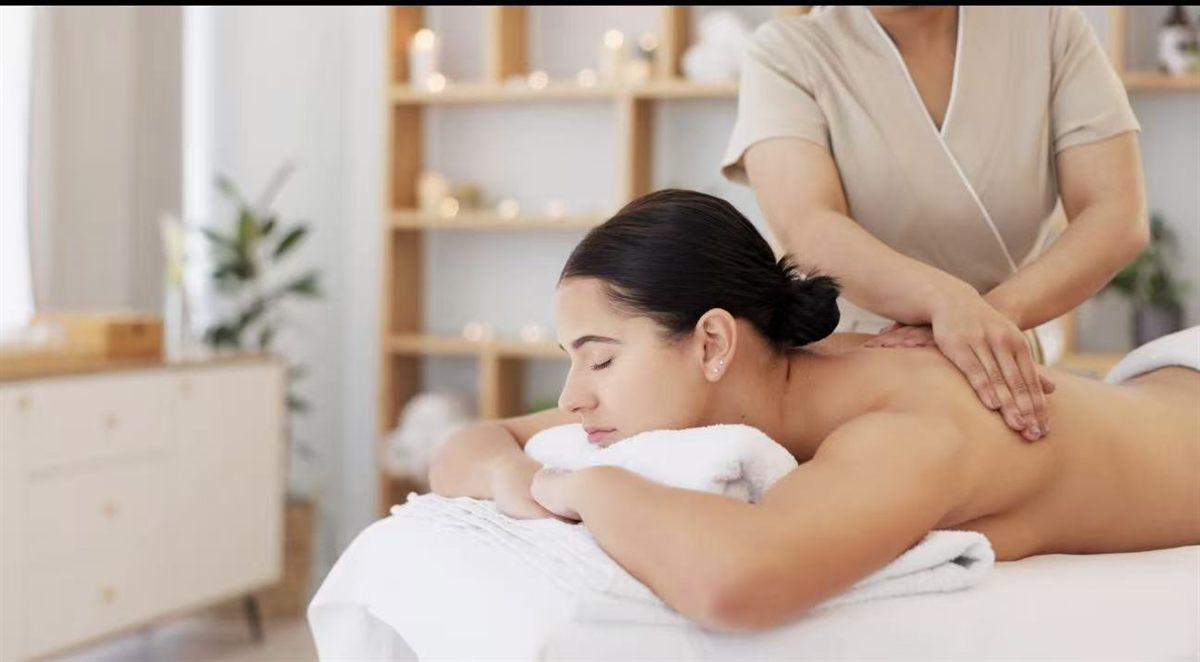
The easiest way to understand cupping is to picture the opposite of a massage. When a therapist gives you a massage, hands and forearms press down into the muscle. Cupping does the reverse. The suction pulls the skin and the layer of tissue underneath it up and into the cup.
That is why people describe the sensation as a deep stretch from the inside, or a steady tug, rather than pressure. It is also why cupping pulls a little blood toward the surface, which is the part most people are curious about. The pull is the point. Everything else about cupping follows from it.
Dry cupping vs wet cupping — we only do dry
The single most important distinction in cupping is whether the skin stays intact, and there are only two answers. Dry cupping does not pierce the skin. Wet cupping pierces the skin so that blood flows into the cup. Those are two very different things, and the gap between them is larger than the names suggest.
Healing Hands offers dry, non-piercing cupping only. We do not perform wet cupping, and we never will. Dry cupping leaves a temporary mark, like a bruise. Wet cupping is, by design, a procedure that opens the skin, which moves the conversation from discoloration to an open wound and the heavier risks that come with it. If you ever book cupping anywhere and the provider cannot tell you plainly which one they do, settle that question before anything else.
Where the technique details live
The level here is what cupping is and how to think about it. The hands-on technique choices — silicone suction cups versus traditional glass, how cups are placed and glided, how cupping rides inside a deep tissue session, what a visit costs, and how to book — all live on the cupping therapy hub. If you want the operational details, that is the page to read.
The short version is that we run cupping as one comfortable step inside a real massage rather than as a standalone gimmick, because the skilled hands-on work is where the stronger benefit sits. The hub walks through exactly how that works.
What people use cupping for, honestly
People traditionally use cupping to feel looser and more relaxed, and many guests do say a session leaves them that way. That is the honest claim, and it is worth having. What cupping is not is a proven treatment for any condition, and that is worth being plain about before you decide.
There is a real tension in cupping writing between what gets promised and what the evidence supports. Both sides are laid out below so you can weigh them.
What cupping is good for, traditionally — and what guests say they feel
Cupping has long been used as a comfort practice for tight, achy muscles and general tension. People reach for it the way they reach for a hot shower on stiff shoulders or a long stretch after sitting all day. It is something you do to feel better in the moment, rooted in tradition rather than in a clinic. When people ask what cupping is good for, that is the honest answer: comfort and a sense of looseness, not a fix for a diagnosis.
What our guests tell us is consistent and modest. They feel looser. They feel more relaxed. Many enjoy the deep-stretch pull, the sense of tissue being drawn gently upward instead of pressed down. Some of that feeling almost certainly comes from the plain comfort of lying still in a quiet room while someone tends to a body you usually ignore. That is a genuine experience, and it is a fine reason to try cupping. It is simply not the same thing as a treatment that has been shown to fix something.
What the evidence actually says (NCCIH lists no conditions it treats)
The part most cupping pages skip is the evidence. The National Center for Complementary and Integrative Health, the federal agency built to study practices exactly like cupping, publishes a cupping fact sheet that lists no conditions the practice treats and cites no trials showing it works. The benefits section is, in effect, missing. Most of the fact sheet is about safety.
When a research body that exists to evaluate these practices declines to make a single benefit claim, that silence is itself the finding. The honest reading is neither that cupping has been proven to work nor that it has been proven useless. It is that the high-quality evidence needed to say either way is largely not there. Cupping sits well below better-studied practices on the evidence scale, with far less rigorous research behind it.
Why we don't say detox, flush toxins, cure, or speed recovery
You will see other places claim cupping detoxes the body, flushes toxins, cures conditions, reduces inflammation, or speeds recovery. We do not make any of those claims, because none of them is established. Your liver and kidneys handle clearance in your body; a cup on your back does not. The marks are not toxins leaving the skin, despite how often that gets repeated.
The distinction we hold onto is simple. It is honest to say people use cupping to feel looser and more relaxed. It is dishonest to say cupping treats, heals, or prevents anything. So we describe cupping the way we would want it described to us: a low-evidence, traditional comfort practice that complements massage, rest, hydration, sleep, and medical care, and never replaces any of them. If a provider ever tells you cupping will detox you or cure a condition, treat that as a reason to walk out.
Who might consider cupping — and who shouldn't
Cupping might be a reasonable thing to try if you are curious, generally healthy, and sore but not injured. It is not appropriate for everyone, though, and a short list of conditions are real reasons to skip it entirely. We sort out which group you are in during intake, and we would rather turn down a booking than do cupping on someone who should not have it.
When cupping might be a fit (curious, sore-not-injured, everyday tension)
Cupping tends to suit people who are simply curious about it, who carry ordinary everyday tension, or who are sore from normal activity rather than hurt. The upper-back tightness that builds over a week at a desk, generally stiff shoulders, the wound-up feeling after a stressful stretch — that is the lane where people most often find a session pleasant.
Two sibling pages go deeper into specific situations, and they own those angles. If your interest is athletic, recovering between hard training efforts, our cupping recovery page for runners and lifters is the one to read. If you want everyday-tension recovery from a top-rated, licensed provider and you are a cautious first-timer, the top-rated cupping recovery page covers that. The general explainer stays here.
Who should avoid cupping entirely
Cupping is not safe for everyone, and some people should not get it at all. The clearest reasons to avoid it come straight from safety guidance, and they matter because suction breaks tiny surface vessels by design, so anything that affects bleeding, skin integrity, or healing changes the risk picture.
Tell us your medications and any conditions at intake, and check with your own physician when you are unsure. And separate from this list, one firm rule for everyone: do not put cups over a fresh injury, and do not let cupping delay real care. See a medical provider for an actual injury or illness.
A plain list of contraindications
These are reasons to skip cupping entirely or to clear it with your doctor first. None of this is meant to alarm anyone; it is just the honest safety picture, and a careful provider will go through it with you before the first cup goes on.
Blood thinners and bleeding disorders
If you take a blood thinner or have a bleeding or clotting disorder, cupping is not appropriate without clearance from your physician. Suction ruptures tiny vessels on purpose, and anything that increases bleeding makes the marks deeper and the risk higher.
Fragile, broken, or infected skin
Cupping should not go over fragile or broken skin, an active skin infection, or an open wound in the area. The skin needs to be intact and healthy for suction to be safe, and an open or infected area is a clear stop.
Eczema or psoriasis flares
Cupping can worsen eczema or psoriasis, so we keep cups away from any area where those conditions are flaring. If you have a skin condition, mention it at intake so we can plan around it or skip cupping that day.
Pregnancy and fresh injuries
Certain placements are not appropriate during pregnancy, so tell us if you are pregnant and check with your provider first. And never put cups over a fresh strain, sprain, or any acute injury — that needs assessment and rest or care, not suction.
What the marks really are
The round marks cupping leaves are pooled blood from tiny ruptured capillaries, the same biology as a bruise, produced by suction instead of a blow. They are not toxins, and they are not bruises from impact. Understanding this one fact clears up most of the confusion and most of the marketing.
Pooled blood, the same biology as a bruise, not toxins
When the cup pulls the skin and surface tissue upward, the suction ruptures tiny blood vessels just beneath the surface, and a small amount of blood leaks into the surrounding tissue. What you see afterward is a flat, round patch of discoloration tracing the rim of the cup — pink, red, purple, sometimes nearly dark. That is it. The cause is negative pressure rather than an impact, but the underlying biology matches a bruise.
The marks are not toxins being pulled out, whatever the photos online suggest. There is no mechanism by which a cup draws toxins through intact skin, and the federal fact sheet describes the marks as temporary discoloration, not a detox event. They tend to look more dramatic than they feel, and are usually not tender afterward.
How long they last (3 to 7 days) and telling a clinician
Cupping marks typically fade in 3 to 7 days, faster on some areas of the body than others. They clear on their own and need no special treatment to disappear. If timing matters for photos or an event, plan around that window, which the aftercare section below covers.
One practical point that is easy to overlook: tell any clinician who sees the marks where they came from. Symmetrical round patches on someone's back can be misread without context, so a quick mention spares everyone the confusion. That guidance comes straight from the NCCIH fact sheet, and it is worth following.
What to avoid after a cupping session
After cupping, the honest aftercare is short and entirely about comfort: drink water, keep the area warm and covered, and skip the hot tub, sauna, and a hard workout for about 24 hours. None of it is medicinal. The marks need no treatment and will fade on their own; these habits just help you feel your best and keep the marks from showing up where you do not want them.
There is also a line between aftercare and actual medical care, and it is worth drawing clearly. Comfort guidance is one thing. A real injury or illness is another, and cupping should never stand in for getting that looked at.
Aftercare for the first 24 hours
For the first day or so, take it a little easy and let the area settle. Most of this is common sense, and there is nothing dramatic to manage.
Think of the next 24 hours as a quiet window. Hydrate, stay warm, and skip the things that tend to make fresh marks more pronounced or the area feel less comfortable.
A simple aftercare checklist
None of these steps are treatments, and skipping one will not harm you. They are simply how to stay comfortable after a session and how to manage when the marks show.
Hydrate and keep the area warm
Drink some extra water through the rest of the day, and keep the cupped area warm and covered, especially if you are heading out into cooler West Knoxville weather. This is about comfort, not detox — water does not flush anything out of the marks, it just helps you feel good.
Skip the hot tub, sauna, and hard workouts for ~24 hours
Give the hot tub, sauna, and any hard workout a rest for about a day. Many guests find the area feels better when they take it easy right after, and there is no upside to loading freshly cupped tissue or overheating it the same afternoon.
Cover the marks before events or photos
If you have something on the calendar where you would rather not explain round marks, cover them. A loose, darker top hides them well for the first day or two; thin or light fabric can let them show through. For anything photographed up close, plan further ahead.
Book 7 to 10 days before a wedding, beach trip, or photoshoot
Because the marks take 3 to 7 days to fade, give yourself a buffer. Booking 7 to 10 days before a wedding, beach trip, or photoshoot leaves room for them to clear, or you can ask your therapist to keep cups off any skin that will show that visit.
Cupping side effects worth knowing about
Most of the NCCIH cupping fact sheet is about safety, so an honest guide should name the documented side effects rather than gloss over them. Beyond the temporary marks, cupping can cause persistent skin discoloration, scars, burns, and infections, and it may worsen eczema or psoriasis. Severe side effects are rare but have been reported, and unsanitized equipment shared between people can spread bloodborne diseases such as hepatitis B and C.
Those risks are the reason the rest of this page exists: dry cupping only, by a licensed therapist, with equipment sanitized between every guest, and a real intake to screen out anyone who shouldn't have it. Most of the serious side effects trace back to either broken skin or unclean equipment, which is exactly what those practices are meant to prevent. If you notice a burn, a spreading rash, a mark that is not fading, or any sign of infection, see a medical provider.
When to see a medical provider instead
See a medical provider, not a cupping session, for any actual injury or illness. Cupping is a comfort practice. It is not a treatment, and it should never delay real care. If you have a fresh strain or sprain, a sharp or worsening pain, or any health problem that needs attention, get that looked at first.
Do not put cups over a fresh injury, and do not let cupping postpone seeing a clinician about a real condition. If you take medication, are pregnant, have a skin condition, or bruise or bleed easily, talk it through with your own provider before trying cupping. Once you are cleared and dealing with ordinary tension or soreness again, a session is a fine thing to come back to.
Try cupping in Knoxville: where to go next
Curious enough to try it? Healing Hands offers dry, non-piercing cupping by Tennessee-licensed LMTs at two West Knoxville spas. Both run the same dry-cupping-only policy, the same licensed therapists, and the same equipment sanitation between guests. Choose the location that is the shorter drive for you.
We hold 4.8 stars across more than 1,500 Google reviews and a Best of Knoxville 2026 win at both spas. Hours at both locations are Monday through Saturday 10am to 8pm and Sunday 1pm to 8pm.
Dry cupping only at Farragut and Cedar Bluff
Every cupping session at Healing Hands is dry and non-piercing, performed by a Tennessee-licensed massage therapist. We do not offer wet cupping or anything that breaks the skin. Equipment is sanitized between every guest, which matters because suction alone can leave trace blood on the gear even in dry cupping, so cleaning it between clients is basic safety rather than an extra.
We run cupping inside a real massage rather than as a quick standalone, and we go over your medications, skin, and health history at intake before anything goes on. If something on the contraindication list applies to you, we will say so.
Pick the closer West Knoxville location
Both spas sit in West Knoxville, so the right one is simply whichever is the shorter trip. The details for each are below.
Farragut — 10935 Kingston Pike (Turkey Creek, Hardin Valley)
Our Farragut spa is at 10935 Kingston Pike, Knoxville, TN 37934, near the Turkey Creek corridor and an easy run from Hardin Valley and the western Kingston Pike stretch. Call the front desk at (865) 671-3200 with any questions about cupping before you book, and grab one of the pull-up spots right in front — no garage, no stairs.
Cedar Bluff — 9621 Countryside Center Ln (Bearden, West Hills, off I-40 exit 378)
Our Cedar Bluff spa is at 9621 Countryside Center Ln, Knoxville, TN 37931, about a minute off I-40 exit 378 and usually the quicker trip from Bearden, West Hills, and the West Town Mall area. Call (865) 236-0880 to ask about availability or anything on the safety list, and use the quiet shared lot off Countryside Center Ln.
Where this guide's claims come from
The honest framing here comes from the federal research agency, not from us. We lean on it deliberately so the claims are attributable rather than something a spa simply asserts.
The aim is general health education, not medical advice. For any decision about your own health, talk with your own clinician.
NCCIH cupping fact sheet and what it does (and doesn't) say
The main source is the National Center for Complementary and Integrative Health, part of the National Institutes of Health, and its cupping fact sheet at nccih.nih.gov/health/cupping. That fact sheet lists no conditions cupping treats and cites no trials showing it works. Most of it covers safety: the marks, the documented side effects, who is at higher risk, and the importance of sanitized equipment. The no-toxin, bruise-biology, 3-to-7-day fade, and contraindication points all trace back to it.
Two related NCCIH resources fill in the wider picture: the agency's overview of traditional Chinese medicine, which explains that long tradition does not by itself establish that a practice works, and its fact sheet on chronic pain and complementary approaches, which is consistently cautious about low-evidence practices and stresses not delaying conventional care. NCCIH provides this material for general education and notes that it is not a substitute for the advice of your own health care provider. If you take medication, are pregnant, have a skin condition, or bruise or bleed easily, talk it through with your clinician before trying cupping.
Keep exploring
Cupping therapy in Knoxville: the full how-it-works hub Cupping for athletes and muscle recovery Top-rated cupping recovery for everyday tension Deep tissue massage, where the stronger benefit sits Stress relief massage for wound-up weeks Therapeutic massage for chronic tight spots See the full Healing Hands service menu Farragut and Cedar Bluff locations and hours
Try Cupping at Healing Hands Spa in Knoxville
An honest cupping guide for Knoxville, explained simply — what it is, what it's used for, the marks, side effects, and aftercare. Learn the basics, then book.
Book Farragut Book Cedar Bluff
Cupping is offered as an add-on or focused session at either location — Mon–Sat 10am–8pm, Sun 1pm–8pm.
Our Knoxville Locations
Healing Hands Spa — Farragut
10935 Kingston Pike, Knoxville, TN 37934
West Knoxville · Kingston Pike near Turkey Creek
Mon–Sat 10am–8pm • Sun 1pm–8pm
Healing Hands Spa — Cedar Bluff
9621 Countryside Center Ln, Knoxville, TN 37931
Central Knoxville · I-40 / I-75 exit 378
Mon–Sat 10am–8pm • Sun 1pm–8pm
Cupping Explained: A Knoxville Guide — Common Questions
What is cupping, in plain terms?
Cupping is a traditional practice in which a therapist places a cup on your skin and creates suction, pulling the skin and the tissue just beneath it gently upward. It is the opposite of a massage: a massage presses down into muscle, while cupping draws tissue up, which is why it produces a deep-stretch pulling feeling rather than pressure. At Healing Hands in Knoxville we offer dry, non-piercing cupping only, performed by Tennessee-licensed massage therapists, with equipment sanitized between guests. It is a comfort practice, not a medical treatment.
Does cupping actually work, and what does the evidence say?
Honestly, the high-quality evidence needed to say cupping works is largely missing. The National Center for Complementary and Integrative Health, the federal agency that studies practices like this, publishes a cupping fact sheet that lists no conditions cupping treats and cites no trials showing it works, and most of that fact sheet is about safety. Many people use cupping to feel looser and more relaxed, which is a real experience and a fine reason to try it, but it is not a proven medical effect. Cupping is best treated as a low-evidence traditional comfort practice that complements massage, rest, and sleep, never a cure.
Do cupping marks hurt, and are they bruises or toxins?
Cupping marks are not toxins. They are pooled blood from tiny ruptured capillaries, the same biology as a bruise, produced by suction instead of impact. The cup pulls the skin and surface tissue upward, which ruptures tiny vessels just beneath the surface, leaving a flat, round patch of discoloration. The marks usually look more dramatic than they feel and are usually not tender afterward.
How long do cupping marks take to fade?
Cupping marks typically fade in 3 to 7 days, faster on some areas of the body than others. They clear on their own and need no special treatment. If you have a wedding, beach trip, photoshoot, or any photographed event coming up, book your cupping session at least 7 to 10 days ahead so the marks have time to fade, or ask your therapist to keep cups off any skin that will show that visit.
What should I avoid after a cupping session?
For about 24 hours after cupping, skip the hot tub, sauna, and any hard workout, and keep the cupped area warm and covered. Drink some extra water and take it easy. If you have an event or photos coming up, cover the marks with a loose, darker top, since the marks take 3 to 7 days to fade. None of this is medicinal — it is comfort guidance. For any actual injury or illness, see a medical provider rather than relying on cupping.
What are the side effects of cupping?
The most common side effect is the temporary round marks, which are pooled blood like a bruise and fade in 3 to 7 days. The NCCIH cupping fact sheet also documents that cupping can cause persistent skin discoloration, scars, burns, and infections, and it may worsen eczema or psoriasis. Severe side effects are rare but have been reported. Using the same equipment on more than one person without sanitizing it can spread bloodborne diseases such as hepatitis B and C, which is why Healing Hands offers dry cupping only and sanitizes equipment between every guest. If you notice a burn, a spreading rash, or a mark that is not fading, see a medical provider.
Who should NOT get cupping?
Cupping is not appropriate for people on blood thinners or with bleeding disorders, over fragile or broken skin, over an active skin infection or open wound in the area, or where eczema or psoriasis is flaring, because cupping can worsen those conditions. Certain placements are not appropriate during pregnancy. Never put cups over a fresh injury. Tell your therapist your medications and conditions at intake, check with your physician when in doubt, and see a medical provider for any actual injury or illness rather than letting cupping delay care.
Is cupping safe?
For most healthy adults, dry cupping from a licensed therapist is low risk, but it is not safe for everyone. The NCCIH cupping fact sheet spends most of its space on safety, noting that the same equipment used on more than one person without sanitizing between clients can spread bloodborne disease, which is why we sanitize equipment between every guest. People on blood thinners, with bleeding disorders, with fragile, broken, or infected skin, with eczema or psoriasis flares, or who are pregnant should avoid cupping or clear it with a doctor first. We offer dry, non-piercing cupping only and review your history at intake.
What is the difference between dry and wet cupping, and which do you offer?
The difference is whether the skin is pierced. Dry cupping does not pierce the skin; it uses suction alone and leaves a temporary mark like a bruise. Wet cupping pierces the skin so that blood flows into the cup, which carries heavier risks. Healing Hands offers dry, non-piercing cupping only, performed by Tennessee-licensed massage therapists. We do not offer wet cupping and never will. And cupping of either kind is a comfort practice, not a replacement for massage or medical care — for an actual injury or illness, see a medical provider and do not let cupping delay that care.
Can I get cupping if I'm pregnant or on blood thinners?
If you are on blood thinners or have a bleeding disorder, cupping is not appropriate without clearance from your physician, because suction ruptures tiny vessels by design and anything that increases bleeding raises the risk. If you are pregnant, certain placements are not appropriate, so tell your therapist and check with your provider first. In both cases, share your full history at intake. We would rather decline a session than do cupping on someone who should not have it.
More on Cupping & Recovery in Knoxville
Cupping Therapy in Knoxville, TN Best Cupping for Recovery in Knoxville, TN Top-Rated Cupping Recovery in Knoxville, TN
Sources & further reading
Independent, non-commercial information on massage and wellness from the NIH's National Center for Complementary and Integrative Health (NCCIH), Mayo Clinic, and the American Massage Therapy Association: